The End of the Closed-Source Era Is at Hand: Obscurity Was Never Security
The Coldcard hardware wallet contained a preprocessor guard error that routed seed generation to a weak software PRNG instead of the hardware entropy source, reducing entropy to about 40 bits on some models. This flaw was present in publicly readable firmware since March 2021 and remained unnoticed for over five years despite human review. Coinkite changed its firmware license from free software to source-available MIT with a Commons Clause after Foundation Devices used the code in a competing product. The license change did not improve security but altered the economics of bug discovery, as AI now makes all distributed code readable or soon will be. Obfuscation cannot remove information from machine code, and AI tools can decompile binaries into pseudo-C with nameless variables and flattened control flow. Researchers demonstrated that AI models can solve longstanding mathematical problems quickly, such as disproving the Erdős unit-distance conjecture and Keller's Jacobian conjecture. The Jacobian conjecture disproof was verified by Lean within hours and is short enough for confirmation in a computer algebra system in about a minute. Coinkite suspects that AI was used to analyze the publicly available firmware and locate the bug, although an AI-assisted audit weeks prior found nothing. The Coldcard hack illustrates that when machines can read code humans cannot, closed source software ceases to provide security through obscurity. Users who trusted the Coldcard device to generate secure seeds offline lost Bitcoin due to this vulnerability, highlighting the risks of closed-source reliance. A compiled program must reveal its instructions at execution, so closed-source code cannot hide its true behavior from analysis.
Tether expands tokenization business into Saudi Arabia, starting with real estate
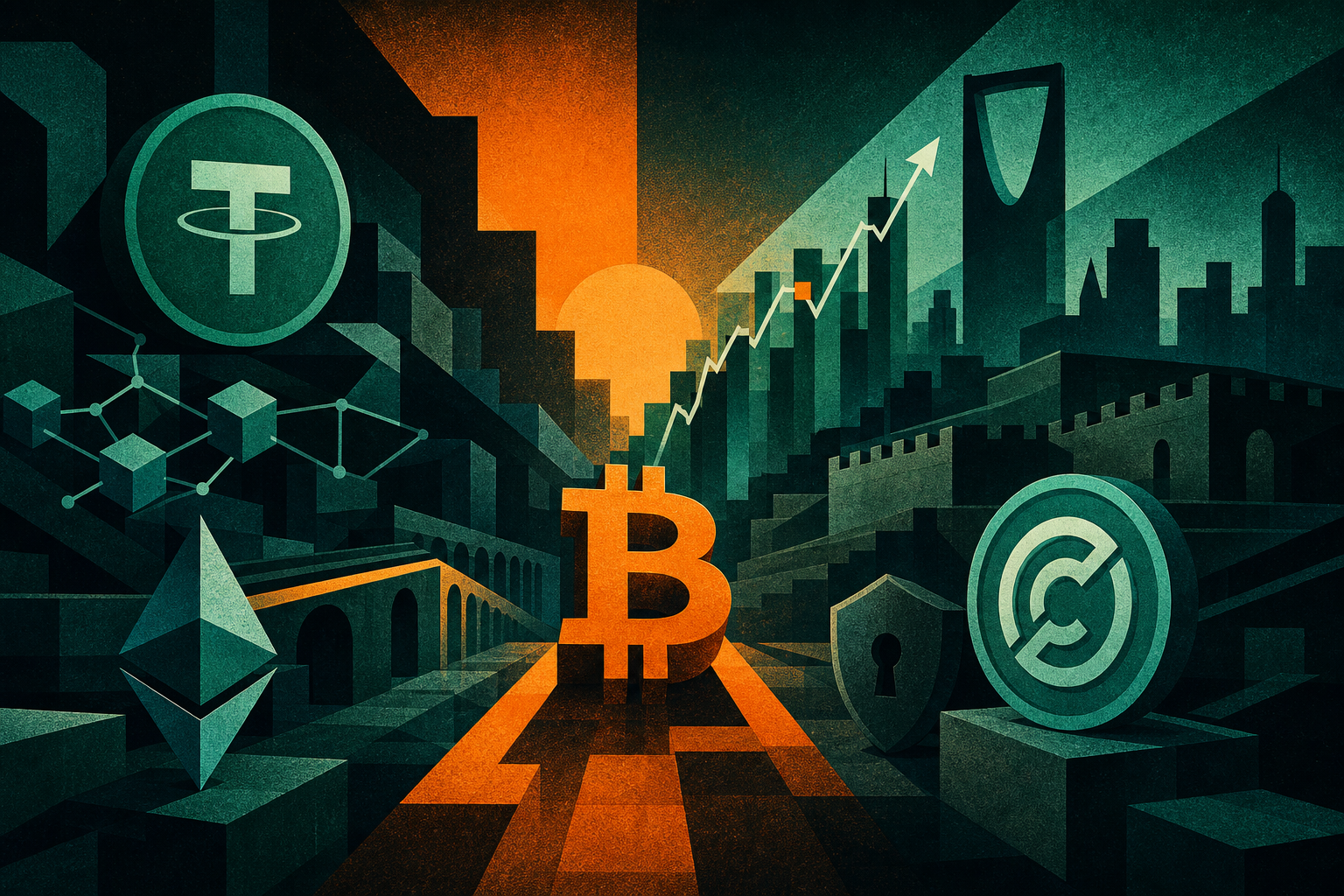
Tether has expanded its tokenization business into Saudi Arabia, initially focusing on real estate assets within the country. The company launched its Hadron platform in 2024 to simplify asset tokenization and currently issues the largest tokenized gold offering, XAUT, valued at $2.6 billion. Hadron will enable the issuance and management of tokenized real estate assets specifically for institutional investors in Saudi Arabia. Tether is collaborating with Saudi partners First Data and fintech firm BKN301 to implement this tokenization initiative in the kingdom. First Data will serve as the issuer and market operator, while BKN301 will integrate the platform with banking and compliance systems. This initiative provides Tether with a strategic foothold in Saudi Arabia, a country pursuing financial modernization under its Vision 2030 program. CEO Paolo Ardoino stated that Saudi Arabia is an ideal market for demonstrating Hadron's impact, aligned with the Vision 2030 economic strategy. Saudi Arabia's Vision 2030 focuses on deploying enterprise blockchain technology across sectors including financial services, government, and supply chain management. The operating model for Hadron could later expand beyond real estate into sectors such as energy, infrastructure finance, and other real-world assets. Tether's expansion into tokenization represents its latest effort to grow beyond stablecoins into blockchain-based financial applications. Banks and asset managers increasingly use tokenization to represent traditional assets like money market funds, private credit, real estate, and equities on blockchains. Citi projects the tokenized securities market could reach $5.5 trillion by 2030, highlighting the growth potential of this technology.
Bitcoin price coils under $65K as US PMI data raises stagflation fears
Bitcoin's price has remained below $65,000 in early August 2026, influenced by stagflation concerns rather than crypto-specific events. The S&P Global US Manufacturing PMI for July 2026 registered 53.9, marking a year of continuous factory activity expansion. Despite expansion, new orders and output growth reached four-month lows, while input costs stayed high due to tariffs and energy prices. Bitcoin ETFs saw hundreds of millions in outflows during early August 2026, reflecting a recurring pattern linked to stagflation-related data releases. Previous episodes of ETF outflows also coincided with mixed manufacturing data earlier in 2026, indicating sensitivity to economic signals. Bitcoin's correlation with the S&P 500 has steadily declined throughout 2026, alongside a weakening relationship with gold, a traditional stagflation hedge. Since the PMI data release on August 3, Bitcoin's price has held firm between $63,000 and $65,000, showing limited momentum for breakout moves. Traders monitoring the $63,000 to $65,000 range are advised to watch inflation data and Federal Reserve commentary on growth and inflation tradeoffs. A breakdown below $63,000 could prompt further ETF outflows, potentially creating a negative feedback loop impacting Bitcoin's price. The July 2026 PMI reading mirrored patterns from the previous year, when similar data temporarily challenged Bitcoin before adoption trends prevailed. Bitcoin is increasingly influenced by ETF flows and macroeconomic sentiment rather than on-chain fundamentals, reflecting its evolving market dynamics.
Ethereum Foundation opens role for AI security researcher
The Ethereum Foundation has opened a new role for an AI security researcher to enhance protocol security using artificial intelligence and manual audits. This researcher will join the Protocol Security team and investigate vulnerabilities across Ethereum's core infrastructure, including execution and consensus layers. Candidates must have extensive knowledge of the Ethereum protocol and preferably have contributed to protocol development or understand execution-layer and consensus-layer specifications. The position is remote and open to candidates globally, including Europe, with relevant programming skills in Go, Rust, Java, C#, Nim, and Python. The role formalizes a workflow combining automated AI-driven vulnerability discovery with manual verification and responsible disclosure management. Recent tests by the Protocol Security team using coordinated AI agents uncovered genuine flaws in protocol code and cryptographic software. One confirmed vulnerability was a remotely triggered panic in libp2p's gossipsub component, part of the peer-to-peer layer used by Ethereum consensus clients. Developers fixed this flaw before it was disclosed as CVE-2026-34219, after researchers provided reproducible evidence and human review confirmed its validity. The new AI security researcher role expands the team responsible for reviewing future hard forks and finding weaknesses before protocol changes reach the main network. Key responsibilities include developing fuzzing tools, manually auditing protocol updates, reviewing hard fork changes, and coordinating vulnerability disclosures. This recruitment follows the Foundation's recent restructuring that dissolved the Protocol Support team, eliminating about 20% of its workforce. The Foundation also appointed security researcher Pascal Caversaccio to its board on July 29, expanding the board to four members with a focus on security.
Cathie Wood's Ark Invest Makes SpaceX, Circle Top Holdings After Latest Buying Spree
Ark Invest CEO Cathie Wood's firm recently made SpaceX and Circle its top holdings after a significant buying spree in early August 2026. In late July, Ark Invest sold shares of Bitmine, Robinhood, Block, and Bullish while purchasing about $43.5 million of Coinbase and Circle stock. Additionally, Ark bought approximately $14.5 million worth of SpaceX shares during the same period, reflecting a strategic portfolio adjustment. Following the companies' second-quarter earnings reports, Ark continued acquiring 181,830 SpaceX shares across four ETFs, including ARKK. The firm also purchased 273,343 Circle shares across ARKK and two other funds, with these acquisitions valued at about $20 million and $17.3 million respectively. SpaceX and Circle now rank among the ten largest positions in Ark's flagship innovation fund after these continued purchases. SpaceX constitutes 4.73% of the ARKK portfolio, valued near $282 million, making it the fund's fifth-largest holding. Circle represents 3.90% of the portfolio, with a market value around $233 million, ranking eighth among ARKK's largest investments. Circle reported $701 million in second-quarter revenue and reserve income, a 7% increase year-over-year, with adjusted EBITDA rising 8% to $143 million. USDC circulation grew 19% to $73.3 billion, while on-chain transaction volume surged 151% to $14.8 trillion during the quarter. Despite SpaceX's 92% revenue increase to $7.8 billion, its shares dropped 13.6%, as investors focused on $18.4 billion capital expenditures for AI expansion.

Reader comments