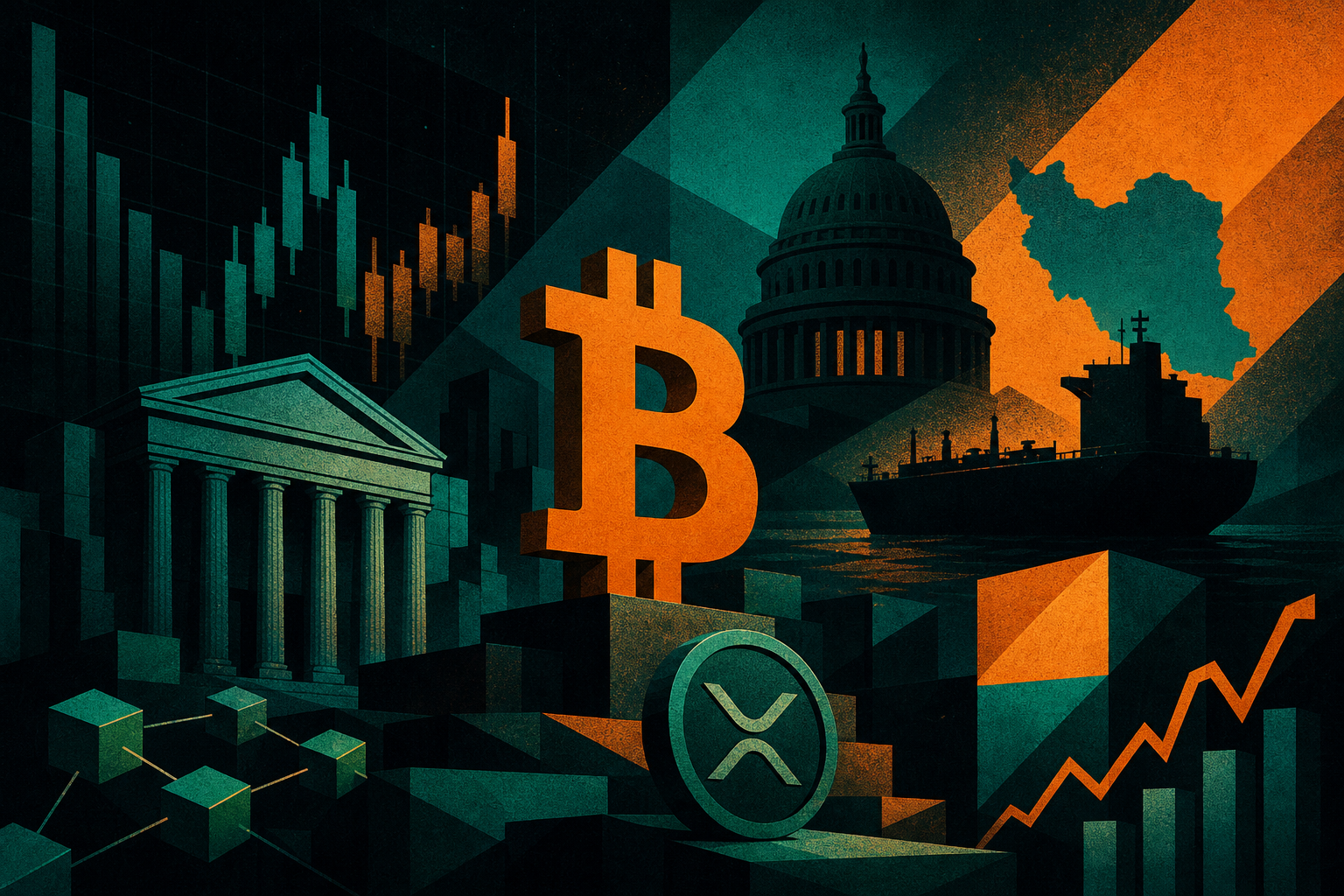
US Sanctions Iranian Marine Insurers Taking Bitcoin for Strait of Hormuz Passage
The US Treasury sanctioned two Iranian firms, HormuzSafe Marine Services Authority and Persian Gulf Marine Insurance Company, for forcing vessels to buy mandatory insurance to transit the Strait of Hormuz. HormuzSafe, developed by Iran's Ministry of Economy, accepts Bitcoin and other digital assets to bypass Western sanctions and generate revenue for the IRGC. The Persian Gulf Marine Insurance Company was established by Iran's insurance regulator and brokers policies approved by the IRGC-backed Persian Gulf Strait Authority. Treasury's Office of Foreign Assets Control blocked all property of these firms within US jurisdiction and warned non-US persons face secondary sanctions for dealings. The sanctions target an IRGC-backed scheme where insurance coverage protects vessels against risks, such as seizures, that Iran itself creates. Babak Morteza Zanjani, an Iranian financier sanctioned earlier this year, promoted HormuzSafe to his social media followers, according to Treasury statements. Treasury Secretary Scott Bessent stated Iran's economy is in freefall with triple-digit inflation, and the US will not allow Iran to hold global commerce hostage. Since the start of the year, Treasury has sanctioned over 100 vessels tied to Iran's shadow fleet, linking the insurance scheme to revenue streams decimated by Operation Epic Fury. In the same action, OFAC sanctioned eight shipping companies based in China, Hong Kong, and the Marshall Islands, and identified eight tankers as blocked property.
US Senate rejects second war powers resolution on Iran as Bitcoin dips and crypto sanctions tighten
On June 25, 2026, the US Senate voted 47-50-1 to reject a second war powers resolution aimed at constraining President Donald Trump's military authority over Iran. This vote was closer than the first resolution's defeat on March 5, 2026, which failed by a 47-53 margin mostly along party lines. Despite pressure from Trump on Republican senators, two Republicans, Rand Paul and Bill Cassidy, supported the resolution against party lines. The Senate's adjournment for a two-week break leaves the ceasefire uncertain and the military conflict without a congressional endpoint. US military actions have escalated, including sinking an Iranian warship that caused dozens of sailor deaths, intensifying the conflict. Bitcoin's price fell more than 3% below $62,000 in early July 2026, linked to Trump's remarks that a tentative ceasefire with Iran was no longer active. Crypto markets face two risk layers: market volatility from geopolitical events and regulatory risks from US government sanctions enforcement. The US Treasury has frozen at least $344 million in Iranian-linked crypto assets, with some estimates reaching $7.7 billion in total assets involved. Exchanges that facilitated transactions involving frozen crypto assets linked to foreign adversaries are under increased regulatory scrutiny by US authorities.
XRP price rebounds toward $1.10 as ETF inflows return
XRP price rebounded toward $1.10 on July 30, supported by fresh ETF inflows and Aviva Investors' adoption of the XRP Ledger, though sellers remain active. On the daily chart, XRP rose 1.68% to $1.0917 after touching an intraday high of $1.0950, following a decline to about $1.045 earlier in the week. ETF inflows returned with $584,000 net inflows into XRP exchange-traded funds on July 29, ending a four-day pause in positive flows. Aviva Investors, a UK asset manager with about $350 billion under management, plans to offer a tokenized share class of its USD Liquidity Fund on the XRP Ledger. The XRP Ledger's recent implementation of the fixCleanup3_2_0 amendment occurred on July 29, coinciding with Aviva's move and ETF inflows. Despite the price recovery, XRP has not confirmed a broader bullish reversal and remains slightly below the Bollinger Bands' 20-day middle line at $1.0975. The 4-hour chart shows XRP trading near the 0.618 Fibonacci retracement level at $1.0908, with sellers active and cash flow still negative. Momentum indicators remain neutral, with the daily relative strength index at 47.58, just below its signal line and under the neutral reading of 50. Higher price targets include $1.1048, $1.1189, $1.1363, and the July swing high of $1.1644, though money flow does not yet support a strong breakout. Liquidation clusters near $1.10 and $1.065 could shape XRP's next short-term move amid ongoing uncertainty surrounding the CLARITY Act. Buying pressure has improved since late June, but bulls have not regained firm control, and XRP has traded sideways since early July after a sharp May decline.
JPMorgan says fading Clarity Act odds weigh on crypto outlook
JPMorgan reported that the chances of the Clarity Act passing before year-end have dropped to 37%, following Senate prioritization of other bills. The Clarity Act aims to establish clear rules for digital assets, which could boost confidence among banks, brokers, exchanges, and asset managers. JPMorgan analysts stated that the legislation would encourage institutional investment and lower barriers for banks, exchanges, custodians, and market makers. The act would divide oversight of digital assets between the SEC and CFTC, creating a more predictable framework for crypto intermediaries and tokenization. JPMorgan warned that delays in passing the Clarity Act could push tokenization towards traditional financial infrastructure instead of public blockchain networks. The bank emphasized that falling odds of the act passing this year represent a setback for crypto markets and institutional adoption. Negotiations on the Clarity Act remain deadlocked over ethics provisions, enforcement, DeFi, stablecoin yield, and anti-money laundering rules. Jefferies cautioned that despite clearing the Senate Banking Committee, the Clarity Act still faces significant hurdles. JPMorgan highlighted that some draft provisions could deter institutional participation by allowing tokenized securities trading outside SEC or CFTC oversight. The bank noted that lighter anti-money laundering requirements in the draft could discourage traditional financial firms from engaging in crypto markets. Analysts led by Nikolaos Panigirtzoglou stated that longer delays increase the risk of tokenization being absorbed by incumbent market infrastructure.
NYSE-Listed AI Company Taps Lightning Network to Pay Employees In Bitcoin
Vida Global, a publicly traded AI operating system company listed on NYSE American as VIDA, has begun paying some employees in Bitcoin using the Lightning network. The company, based in Austin, Texas, started this payment method after an employee in Argentina requested to receive their salary in Bitcoin. Vida uses Bitcoin infrastructure company Voltage to facilitate these transactions, allowing employees to get paid in Bitcoin while the company maintains its balance sheet in U.S. dollars. The payment process sends the equivalent cash amount through Voltage's platform, so Vida's finance team does not handle any cryptocurrency directly. CEO Lyle Pratt explained that Voltage manages Bitcoin payments and the company settles the balance in dollars monthly, similar to standard vendor invoices. Pratt noted that this setup simplifies Bitcoin payments for both employees and finance operations without adding complexity to accounting. Voltage CEO Graham Krizek stated the service addresses a mismatch between globally distributed AI companies and outdated payment rails. The Lightning network, originally designed to enable fast, low-cost Bitcoin transactions for daily purchases, is used by Vida for employee payments. Bitcoin advocates like Jack Dorsey have integrated Lightning into their businesses, including Cash App and Square's point-of-sale terminals. Pratt highlighted that some team members in Argentina prefer Bitcoin payments due to challenges with their local currency. The company emphasizes that employees receive their salaries in seconds in their preferred currency, while the finance team avoids dealing with crypto.


Reader comments